
Understanding Contemporary Indian Art
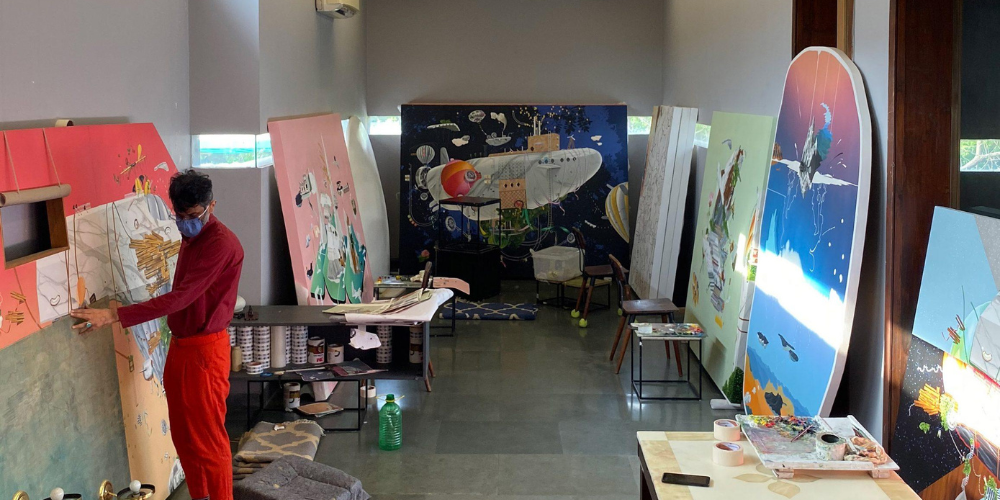

Indian art has a long and diverse history shaped by different cultures, communities, traditions and regions.
From classical sculpture and miniature painting to folk traditions and modern artistic movements, the history of Indian art is incredibly rich. Contemporary Indian art builds on this history while responding to the realities of the present.
Today, artists across India are exploring new ideas, materials and forms while continuing to engage with questions of culture, identity, memory and society.
Contemporary Indian art refers broadly to artistic practices created in the present day. It includes a wide range of mediums such as painting, sculpture, photography, video, installation, printmaking and mixed-media works.
There is no single style that defines contemporary Indian art.
An artist may create a traditional-looking painting while exploring a contemporary social issue. Another may use digital technology to reinterpret an old cultural story.
This diversity is one of the most interesting aspects of the contemporary Indian art landscape.
India’s cultural traditions continue to influence many contemporary artists.
Traditional patterns, mythology, architecture, textiles, local crafts and storytelling can become sources of inspiration. However, contemporary artists often reinterpret these references rather than simply reproducing them.
A familiar cultural symbol may be placed within a completely new context.
This creates an interesting relationship between the past and the present.
Artists can acknowledge their cultural history while also questioning how that history is understood today.
Identity is an important theme in contemporary Indian art.
India is home to many languages, religions, communities, regions and cultural traditions. Artists often explore how these different influences shape personal and collective identity.
Questions around gender, family, place, language, migration and belonging may appear within an artist’s work.
These themes can be deeply personal, but they can also speak to wider social experiences.
Memory is another recurring theme.
Artists often use photographs, objects, architecture and personal stories to explore memories of childhood, family, home and changing landscapes.
A city, village or neighbourhood can become more than a physical location. It can represent personal history.
As Indian cities continue to change, artists are also documenting disappearing spaces, changing communities and evolving ways of life.
Their work can therefore become a visual record of a particular moment in time.
Contemporary Indian art cannot be understood through one city, one style or one generation of artists.
Artists working in Mumbai, Delhi, Kolkata, Kochi, Bengaluru, Chennai and many other regions bring different perspectives to their practices.
The rise of independent art spaces, galleries, artist collectives, cultural institutions and exhibitions has also created more opportunities for audiences to discover new voices.
Regional artistic practices are increasingly becoming part of wider conversations around Indian contemporary art.
Contemporary artists are not limited to traditional materials.
Alongside painting and sculpture, artists are experimenting with photography, video, sound, digital media, installations and mixed-media practices.
Technology has also created new possibilities for artists to communicate with audiences.
However, new technology does not necessarily replace traditional approaches. Many artists combine both.
A contemporary artwork may bring together painting, handmade materials, digital imagery and found objects within the same work.
Understanding contemporary art does not require specialist knowledge.
A good place to begin is simply to observe.
Look at the artwork carefully. Notice the materials, colours, scale and composition. Then consider the title and the context in which the work was created.
Ask yourself:
What do I see?
What do I feel?
What might the artist be trying to communicate?
How does this artwork connect with the world around me?
There may be several possible answers, and that is perfectly natural.
The best way to understand contemporary Indian art is to experience it directly.
Visit exhibitions. Meet artists. Read about their practices. Attend talks and discussions. Explore different mediums and artistic approaches.
Every artist offers a different perspective.
At Indus Art Centre, we aim to create opportunities for audiences to discover artists, engage with ideas and experience the diversity of contemporary art.
Indian art continues to evolve, and today’s artists are contributing to that story in new and meaningful ways.
The story of Indian art is not only about the past. It is also being created today.
